A Developer’s Guide to Smart Contractor Selection
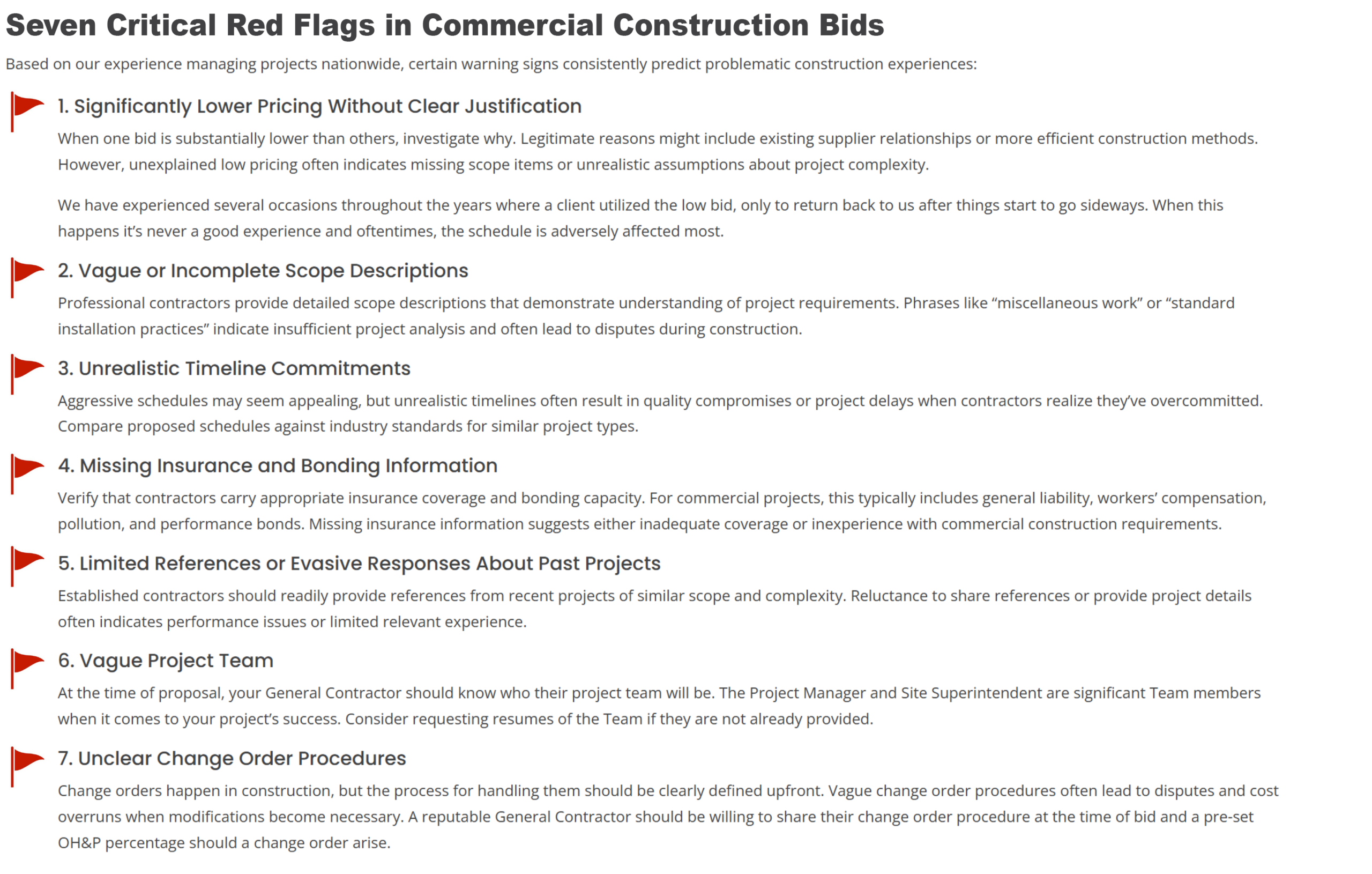
Last month, a restaurant developer in Chicago received three bids for a 4,500-square-foot buildout. The lowest bid came in at $1,485,000, nearly $125,000 less than the competition. Excited by the potential savings, the developer was ready to sign. But a closer examination revealed the low bidder had excluded critical items: kitchen hood installation, grease trap connections, and site landscaping to name a few. By the time construction wrapped up, change orders had pushed the final cost to $1,657,000, making it the most expensive option.
Reading a commercial GC bid isn’t just about comparing bottom-line numbers, it’s about understanding what’s included, what’s excluded, and what risks you’re accepting. For developers, restaurateurs, and retailers investing in new properties, the ability to properly evaluate contractor proposals can mean the difference between a profitable project and a financial disaster.
At Oakline Construction Group, we’ve seen how misunderstood bids can derail even the most promising developments. This guide will walk you through the essential elements of reading commercial construction bids, identifying red flags, and making informed contractor selection decisions that protect your investment.
Understanding the Anatomy of a Professional Commercial GC Bid
A well-structured commercial GC bid follows industry standards that ensure clarity and enable accurate comparison across multiple contractors. The Construction Specifications Institute (CSI) format has become the gold standard for bid presentation, organizing information into consistent divisions that make evaluation straightforward.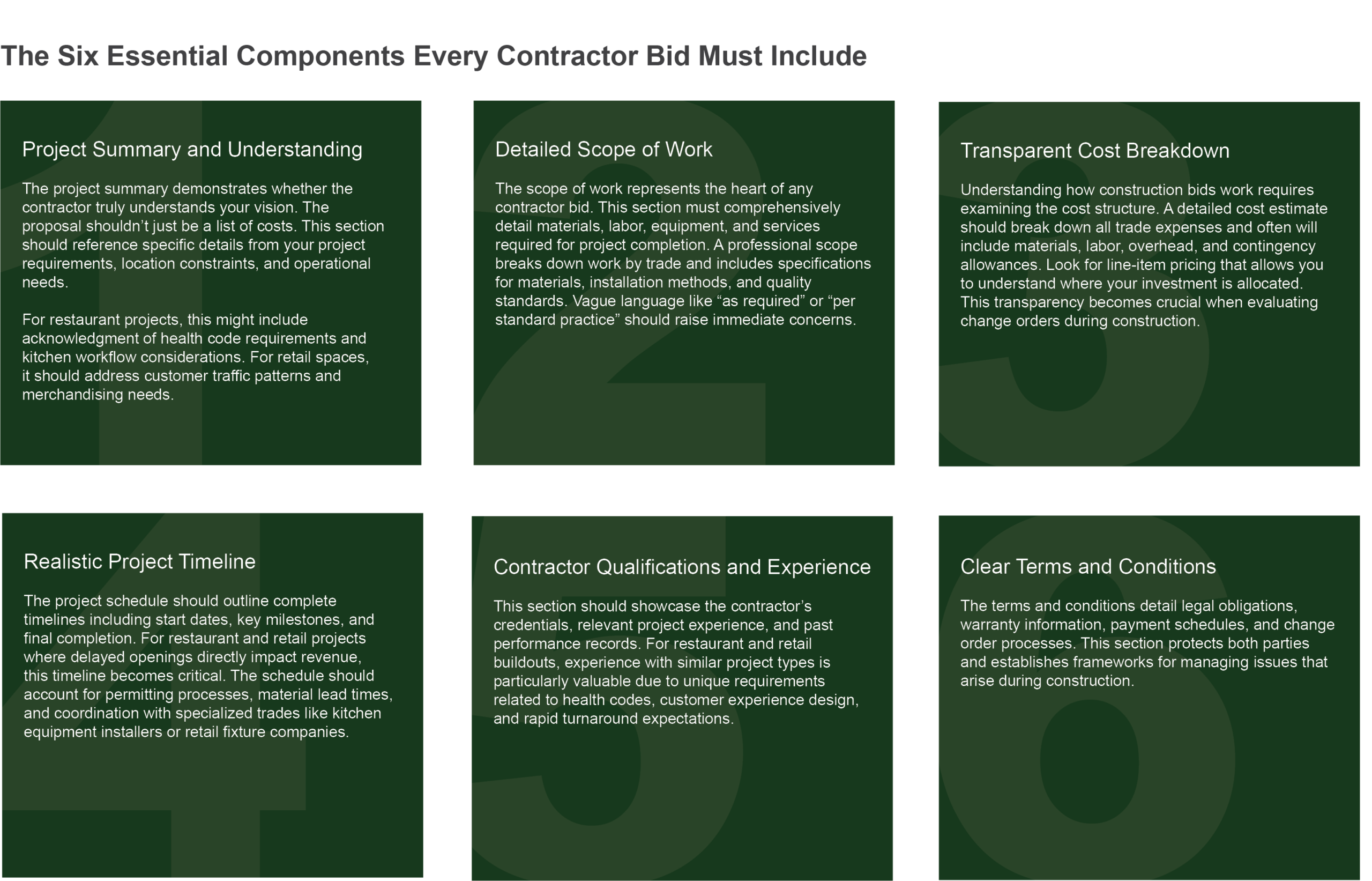
Decoding the Numbers: What Cost Breakdowns Really Tell You
When comparing job bids from multiple contractors, the total price is just the starting point. The real insights come from understanding how contractors structure their pricing and what assumptions they’re making about your project.
General Conditions and Overhead
General conditions typically represent 8-12% of total project cost and cover project management, temporary facilities, and site supervision. Contractors with lower general condition percentages may be cutting corners on supervision or project management, areas that directly impact quality and timeline adherence.
Profit Margins and Risk Assessment
Most commercial contractors showcase a profit margin of 7-10% in their bids. Unusually low profit margins may indicate a contractor is desperate for work or hasn’t properly assessed project risks. Either scenario can lead to problems during construction as the contractor may inflate and create change orders to maintain profitability.
Contingency Planning
Prior to a complete design, professional contractors include contingency allowances of 3-8% to address unforeseen conditions. The absence of contingency planning in a GC bid breakdown often signals inexperience or unrealistic optimism about project complexity.
Industry-Specific Considerations for Restaurant and Retail Projects
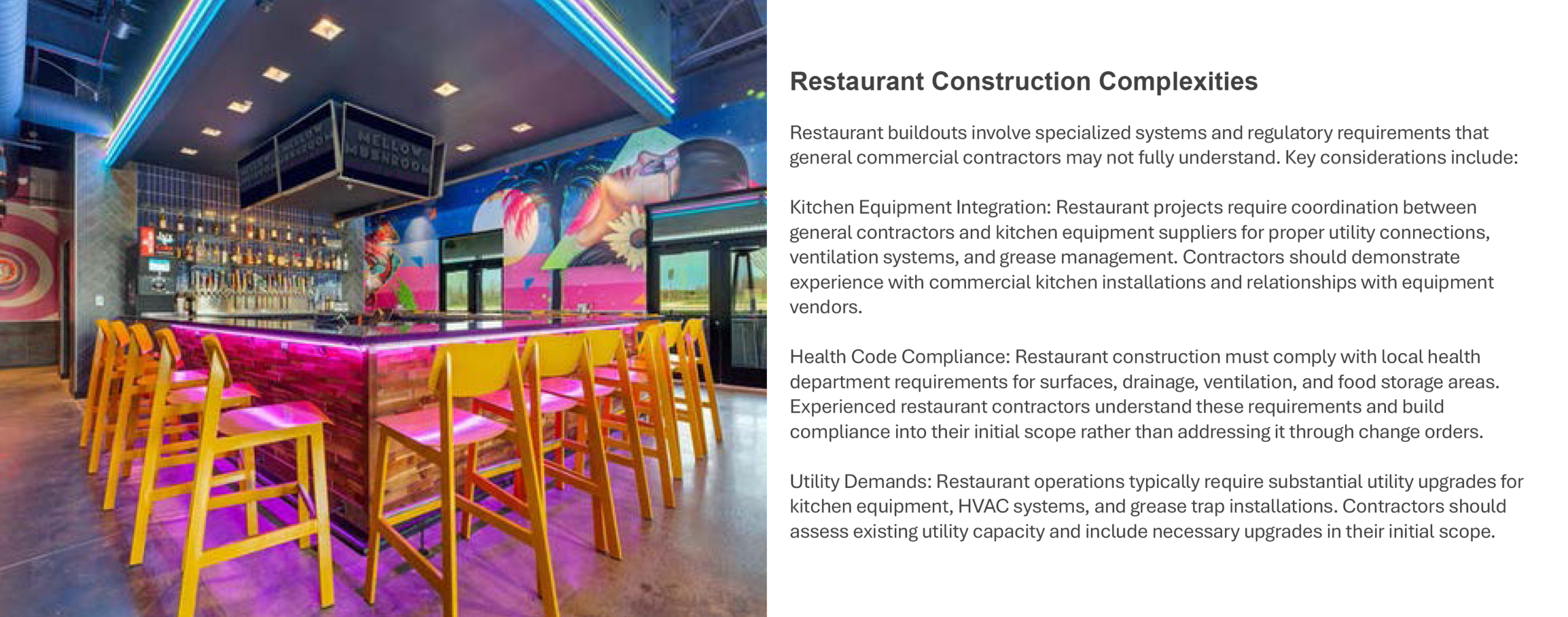
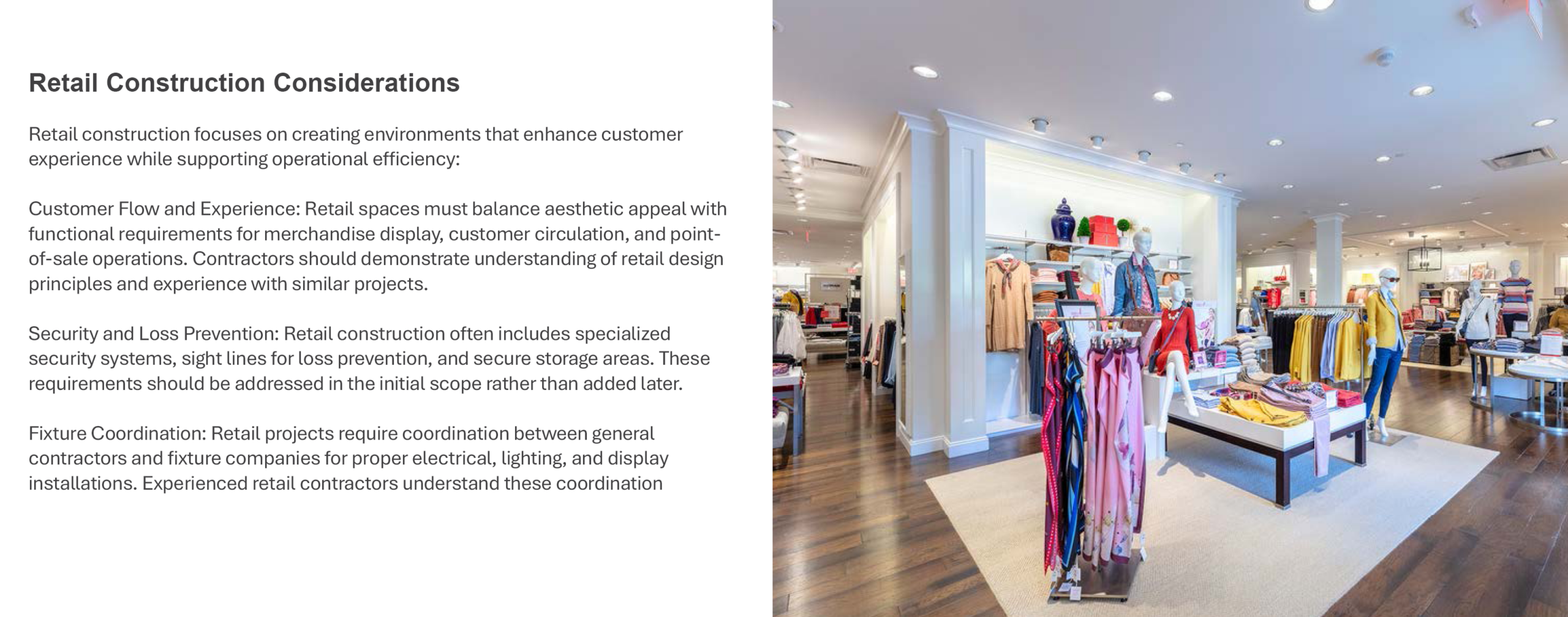
Restaurant and retail construction projects have unique requirements that impact bid evaluation and contractor selection. Understanding these sector-specific considerations helps ensure you select contractors with appropriate experience and capabilities.
Navigating 2026 Market Conditions and Their Impact on Bidding
The commercial construction landscape in 2026 presents unique challenges that affect bid evaluation and contractor selection. Understanding these market conditions helps set realistic expectations and identify contractors who are adapting effectively to current challenges.
The Oakline Approach: Integrated Solutions for a Better Construction Experience
At Oakline Construction Group, our approach to commercial construction bidding reflects our commitment to transparency, quality, and client success. Our four integrated service offerings—Design Build, General Contracting, Pre-Construction, and Construction Management—provide flexibility to meet diverse project needs while maintaining consistent quality standards.
Pre-Construction Value Engineering
Our Pre-Construction services focus on budgeting, scheduling, and constructability reviews that set realistic expectations and identify cost-saving opportunities before construction begins. This proactive approach helps clients avoid the surprises that often derail commercial projects.
During the pre-construction phase, we conduct detailed analysis of project requirements, assess potential risks, and provide transparent cost breakdowns that enable informed decision-making. This process ensures that our bids reflect accurate understanding of project scope and realistic pricing for quality execution.
Relationship-Driven Project Management
Our relationship-centric approach extends beyond the bidding process to encompass the entire project lifecycle. We build strong partnerships with both clients and subcontractors, creating collaborative environments that facilitate problem-solving and quality delivery.
This collaborative approach becomes particularly valuable when addressing the inevitable challenges that arise during construction. Rather than adopting adversarial positions, we work with clients to find solutions that protect project goals while maintaining budget and timeline objectives.
Quality and Safety Standards
Safety is a top priority across all our projects, with strict compliance maintained on all job sites. Our safety protocols and quality standards are transparent and consistently applied, providing clients with confidence in our execution capabilities.
Our “no-excuses attitude” reflects our commitment to accountability and proactive problem-solving. When issues arise, we take ownership and work collaboratively to find solutions rather than deflecting responsibility.
Making the Final Decision: Beyond the Numbers
Selecting the right contractor involves more than comparing bid prices. The lowest bid is rarely the most economical choice when considering total project costs, timeline adherence, and quality outcomes. Instead, focus on value – the combination of price, quality, experience, and reliability that best serves your project goals.
Consider the contractor’s track record with similar projects, their approach to problem-solving, and their commitment to transparent communication. Evaluate their financial stability, insurance coverage, and safety records to minimize project risks.
Most importantly, assess whether the contractor understands your specific needs as a developer, restaurateur, or retailer. Commercial construction is not one-size-fits-all, and contractors who demonstrate sector-specific expertise are more likely to deliver successful outcomes.
Your Next Steps
Reading a commercial GC bid effectively requires understanding both the technical details and the broader market context that influences pricing and delivery. By focusing on transparency, experience, and value rather than just price, you can select contractors who will deliver successful projects that support your business objectives.
At Oakline Construction Group, we’re committed to providing the transparency and expertise that enable informed decision-making. Our nationwide experience across 530+ projects gives us unique insights into the challenges and opportunities facing commercial development today.
Whether you’re planning a single restaurant buildout, a multi-location retail expansion, or an Industrial ground-up project; we’re here to help you navigate the bidding process and achieve your development goals.
Ready to navigate the bidding process with and achieve your development goals?
Contact Oakline Construction Group to discuss how our integrated approach to commercial construction can support your next project.